
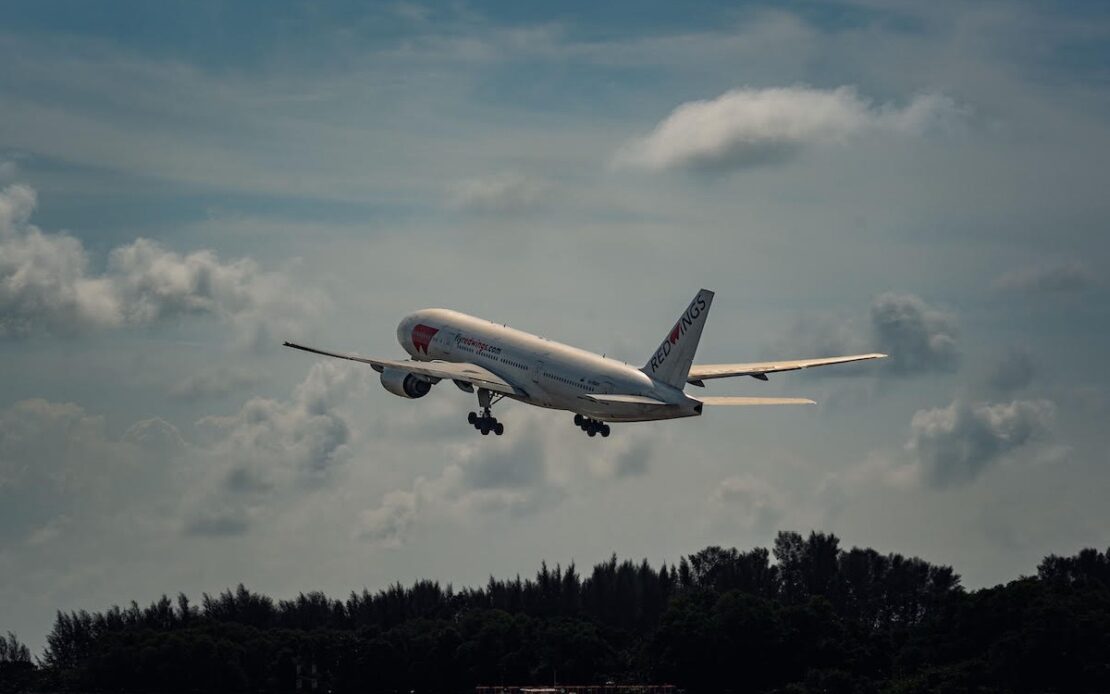
Afraid of flying? Estimates suggest somewhere between a quarter and a third of people experience some level of flying anxiety. Flying anxiety is real, but there are ways that you can reduce your fear.
Instead of trying – and potentially failing – to cure your fear, the aim should be to find ways to reduce anxiety. The Fly Above Fear team has spent years helping anxious flyers use education and insights to reduce flying fear.
Here are 7 evidence-based ways to reduce stress before your flight.
- Understand what’s happening in your body
Fear of flyig is your body reacting to a perceived threat. While we know rationally that flying is safe, it doesn’t stop us from being afraid of it.
Why?
When your brain senses a threat, it triggers the fight-or-flight response: a racing heart, shallow breathing and tense muscles. On a plane, those sensations can be interpreted by your brain as proof that something is wrong. This can feed the anxiety further.
If you can recognise that these symptoms are a normal stress response, not a warning, they can lose some of their power.
- Learn why turbulence feels worse than it is
Turbulence is simply weather being weather and isn’t dangerous – but that doesn’t stop us from worrying about it.
The truth is that aircraft are engineered to handle far more movement than you will ever feel in the cabin. Turbulence may feel uncomfortable, but it’s not unsafe.
The practical advice is to keep your seatbelt fastened whenever you’re seated, because that is what protects you from any movement.
If you want to understand the science, Fly Above Fear has a clear guide to turbulence and common flying triggers.
- Tackle anticipatory anxiety early
For lots of fearful flyers, the worst part isn’t the flight but the days leading up to it.
Rather than letting worry impact you try and set aside a short “worry window” each day to think it through, then move on.
Your mind and your body are linked, so treat yourself well, too. Sleep well and go easy on caffeine and alcohol in the days running up to a flight as both are proven to increase anxiety.
- Practise slow breathing before you need it
Slow breathing is one of the simplest ways to settle your nervous system and restore some calm.
You’ll want to test these techniques before you fly, to prove that they work.
Try this: Start by breathing in through your nose for a count of four and out gently for a count of six.
How does this work? A longer exhale helps signal calm. Practise for a few minutes a day at home and get it down before you fly. It’s always there if you need it, even though we hope you don’t.
- Plan the small things
A lot of flight anxiety comes from a lack of control. While you can’t fly the plane, there are some things you can control that can help to reduce anxiety.
Firstly, choose a seat that suits you. Science shows that a seat over the wing is often the smoothest if you’re worried about turbulence.
Pack a flight comfort kit, download music, podcasts or a show in advance. Make the flight some time for you.
On the day of the flight, arrive early so you’re not rushing. If you feel strong enough, tell the cabin crew you’re nervous. They’re trained to deal with it and can offer support if you need it.
- Don’t fight the sensations
Anxiety can store itself up and sometimes feel like it’s going to break out. That happens if you ignore anxious thoughts, so don’t.
Instead, accept anxiety and explore it. Try to name what’s happening: “This is anxiety, and it will pass.”
Your body can’t maintain an anxious state forever, and you’ll find that anxiety rises and falls. Grounding exercises like 5-4-3-2-1 can help.
- Don’t doomscroll
Anxiety and fear can ruin your experience if you fuel them, so don’t. Avoid doomscrolling and feeding the fear with things like turbulence forecasts.
Useful information should explain what’s normal, why it happens and what you can do about it, without leaving you more worried than when you started.
Free and independent resources like Fly Above Fear have been created to fill the information gap. There’s no hard sell or subscription services, just evidence-based advice, created by experts.
Don’t let fear stop you flying
If you want to fly, you can – even if you feel some anxiety.
Understanding your body’s response, knowing what’s normal in the air and preparing in advance can shift flights from something you dread to something you can manage, and sometimes even enjoy. The aim isn’t to feel no fear at all. It’s to learn to fly above it.
If your anxiety is severe or affecting your daily life, speak to a qualified healthcare professional.