
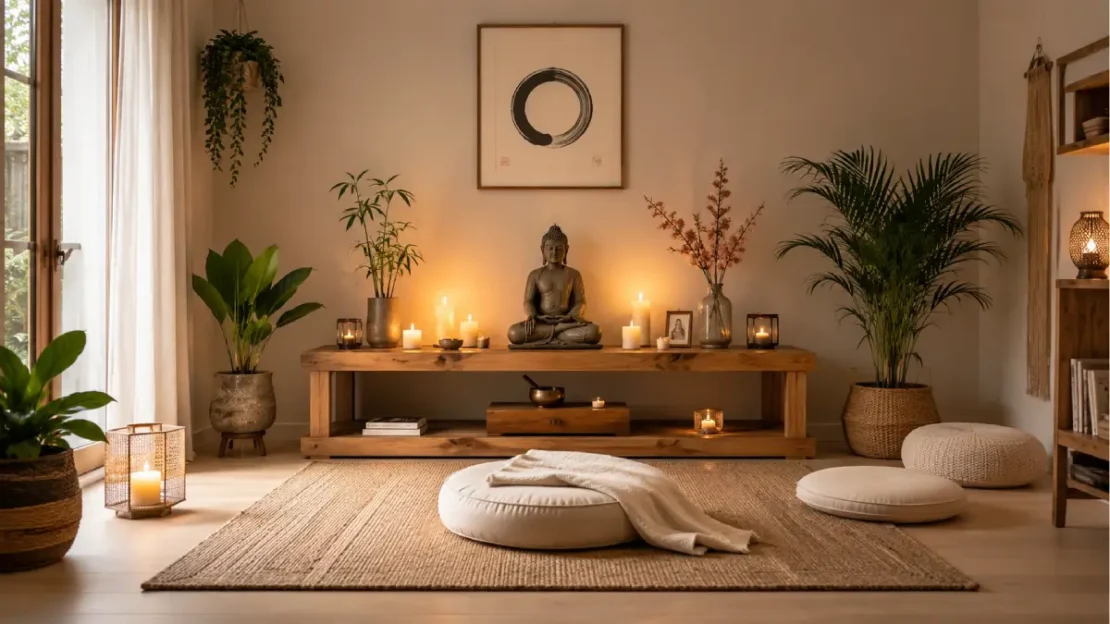
In this nuts, the world goes around super fast, being able to retreat into our peace haven and “just be”, becomes a luxury or even necessity. Having your own personalized meditation room, gives you that exclusive “just us” time and space, away from everyday intrusions, in which you can relax, meditate, pray or even practice yoga. Perhaps one of the greatest treasures you can include in this space: the Meditation Altar.
Whether your faith is Buddhism, Hinduism, Christian, nature inspired, you are a devout believer or a mindfulness meditation practitioner; the table is a beautiful representation that materializes our most important values.
In this post, we are going to look at how to make your space; how to arrange the pieces and even use color pallets, furniture and decorative details for your meditation altar, care and common mistakes.
Why Create a Meditation Room?
Meditation space is so much more than another attractive corner of your home. It’s something that makes your mind and your body go “Yep, it’s time to down-shift the pace and be attentive.
Many people use meditation spaces for:
- Mindfulness meditation
- Guided meditation
- Yoga
- Prayer
- Breathing exercises
- Reading spiritual books
- Gratitude practice
- Journaling
- Relaxation after work
Having a dedicated space also helps build consistency because the environment naturally supports your daily routine.
Benefits of a Dedicated Meditation Space
Creating a meditation room offers numerous benefits.
Better Focus
A quiet room reduces interruptions and helps you remain present during meditation.
Lower Stress
Soft lighting, calming colours, and minimal distractions create an atmosphere that encourages relaxation.
Improved Mental Clarity
Regular meditation may help improve concentration and emotional awareness.
Better Sleep
Many people meditate before bedtime, helping them unwind after a busy day.
Spiritual Connection
If you include an altar, the room becomes a meaningful place for reflection and gratitude.
Choosing the Right Location
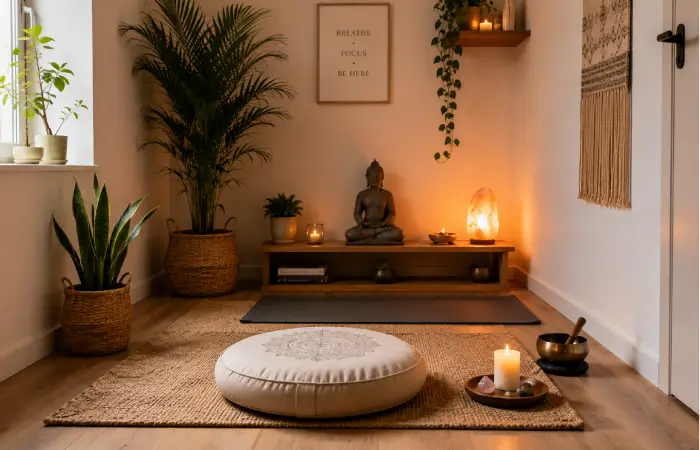
The location of your meditation room can significantly affect the overall experience.
Ideal locations include:
- A spare bedroom
- A quiet home office
- An unused corner
- An attic
- A garden studio
- An enclosed balcony
If you have limited space, even a small corner of your bedroom can become a beautiful meditation area.
Look for spaces with:
- Minimal noise
- Natural daylight
- Good airflow
- Privacy
- Comfortable temperature
Planning the Room Layout
Avoid overcrowding the room.
Instead, leave enough open space for movement and comfortable seating.
A simple layout often includes:
- Meditation cushion
- Yoga mat
- Small altar table
- Indoor plants
- Floor lamp
- Storage basket
- Bookshelf
- Essential oil diffuser
Keeping the room uncluttered helps create a peaceful atmosphere.
Best Colours for Meditation Rooms
Colour strongly influences mood.
Popular calming colours include:
| Colour | Feeling Created |
| White | Peace and simplicity |
| Beige | Warmth |
| Soft Grey | Balance |
| Sage Green | Nature |
| Light Blue | Calmness |
| Lavender | Relaxation |
| Earth Brown | Stability |
Avoid using too many bright colours, which may become visually distracting.
Natural Materials Create Calm
Nature-inspired materials make meditation spaces feel grounded.
Consider using:
- Bamboo
- Cotton
- Linen
- Wool
- Wood
- Stone
- Clay
- Rattan
These materials introduce texture without overwhelming the room.
Designing a Meaningful Meditation Altar
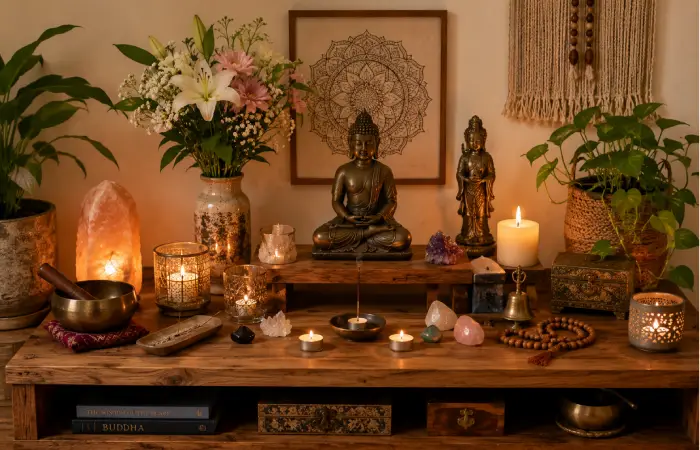
Your altar reflects your personal beliefs rather than following strict design rules.
Many people include:
- Candles
- Crystals
- Incense holder
- Fresh flowers
- Small plants
- Sacred books
- Prayer beads
- Inspirational quotes
- Singing bowl
- Bell
- Meaningful photographs
Choose items that genuinely inspire you instead of decorating simply for appearance.
Choosing an Altar Table
The altar table does not need to be expensive.
Many people use:
- Wooden stool
- Floating shelf
- Small cabinet
- Console table
- Handmade wooden platform
Keep the height comfortable while sitting.
The altar should become the visual centre of the room without dominating the space.
Lighting Ideas
Lighting has a major influence on the atmosphere.
Excellent options include:
- Warm LED lamps
- Himalayan salt lamps
- Tea candles
- Floor lamps
- Paper lanterns
- Dimmable wall lights
- Natural sunlight
Avoid harsh white lighting whenever possible.
Adding Natural Elements
Nature helps create emotional balance.
Popular additions include:
- Bamboo plant
- Peace lily
- Snake plant
- Bonsai tree
- Small fountain
- Pebbles
- Driftwood
- Natural shells
These decorative elements bring freshness and texture into the room.
Sound and Aroma
Gentle sounds and subtle scents can make meditation more enjoyable.
You may choose:
Sounds
- Rainfall
- Ocean waves
- Tibetan bowls
- Forest birds
- Wind chimes
- Instrumental music
Aromas
- Lavender
- Sandalwood
- Frankincense
- Cedarwood
- Jasmine
- Rose
Use fragrances lightly so they remain soothing rather than overpowering.
Furniture for Comfort
A meditation room requires very little furniture.
Useful pieces include:
- Meditation cushion
- Floor pillow
- Yoga bolster
- Small bookshelf
- Storage bench
- Foldable chair
- Blanket basket
Comfort should always take priority over decoration.
Decorating Walls
Keep wall decoration simple.
Ideas include:
- Nature photography
- Minimal artwork
- Mandala designs
- Inspirational typography
- Wooden panels
- Fabric wall hangings
Avoid filling every wall with decorations.
Seasonal Decoration Ideas
Refreshing your meditation space with the seasons can keep it inspiring.
Spring:
- Fresh flowers
- Light fabrics
- Green plants
Summer:
- Bright natural light
- Linen textiles
- Coastal décor
Autumn:
- Warm candles
- Wooden accessories
- Earth tones
Winter:
- Soft blankets
- Warm lighting
- Evergreen branches
Common Mistakes to Avoid
Many beginners accidentally create clutter instead of calm.
Avoid:
- Too many decorations
- Bright flashing lights
- Loud colours
- Strong fragrances
- Excess furniture
- Electronic distractions
- Poor ventilation
Simplicity usually creates the most peaceful environment.
Daily Maintenance
Keeping the room clean supports a calming atmosphere.
Simple habits include:
- Dusting surfaces
- Watering plants
- Replacing flowers
- Cleaning candle holders
- Organising cushions
- Refreshing incense holders
- Opening windows for fresh air
Even a few minutes each week can keep the space feeling inviting. For more related articles visit our website
Frequently Asked Questions
What should be placed on a meditation altar?
Common items include candles, flowers, meaningful symbols, crystals, spiritual books, prayer beads, incense, or personal objects that inspire mindfulness.
Does a meditation room need to be large?
No. Even a small, quiet corner with comfortable seating can become an effective meditation space.
Which colour is best for meditation?
Soft neutrals, sage green, pale blue, white, and earthy tones are popular because they encourage a calm atmosphere.
Can I combine a yoga room with a meditation room?
Yes. Many people design a shared wellness space with enough room for yoga practice, stretching, and meditation.
Is an altar only for religious purposes?
Not necessarily. Many people create altars centred on gratitude, mindfulness, personal goals, or remembrance rather than organised religion.
Conclusion
A thoughtfully designed meditation room and altar can become one of the most peaceful places in your home. Whether you have an entire room or only a small corner, focusing on simplicity, comfort, natural materials, and meaningful personal objects helps create an environment that supports mindfulness and emotional well-being.
Rather than aiming for perfection, let your meditation space evolve naturally over time. As your practice grows, your room can grow with it, becoming a reflection of your inner calm and personal journey.