
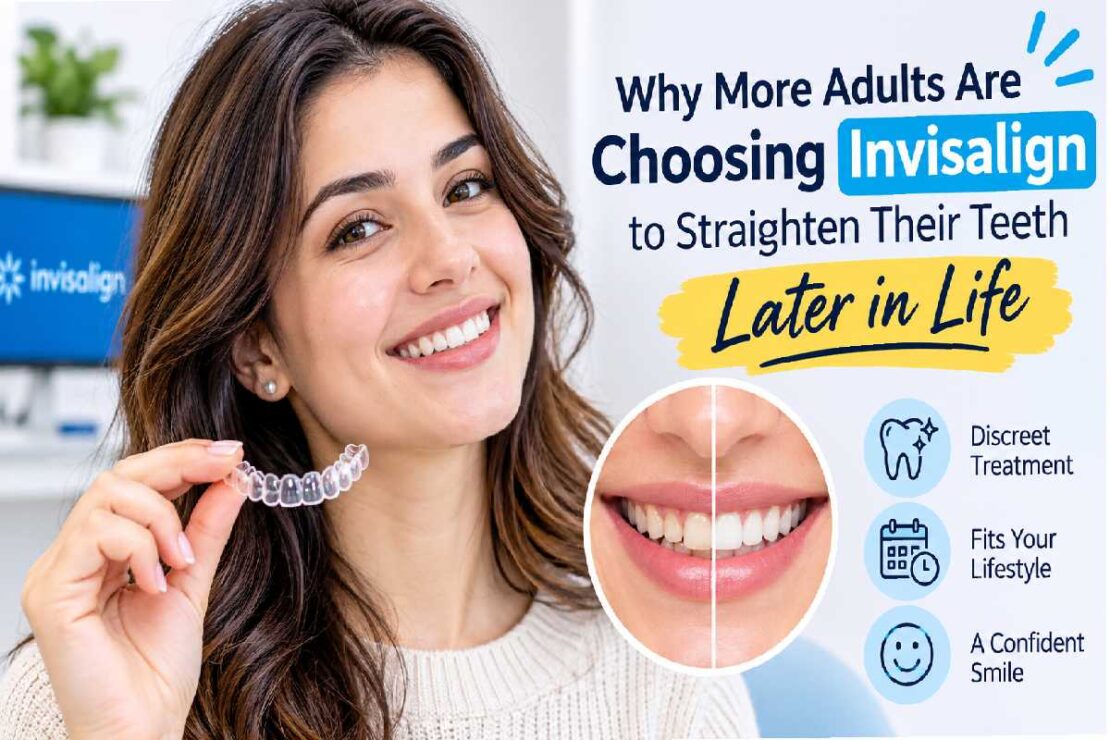
It’s not too late to explore teeth straightening in your 30s, 40s, or beyond. Many adults consider orthodontic treatment because of crowding, spacing, or changes in their bite. Age alone doesn’t determine whether treatment is an option; oral health, the type of tooth movement needed, and a person’s overall goals all matter. An orthodontist can assess your teeth and explain which approaches may fit your situation.
For adults who want a less noticeable option, invisible aligners may be worth discussing. Clear aligners use a series of removable trays to guide teeth over time. They can fit more easily into some work and social routines, but they require consistent wear and professional oversight. Ask how your treatment will be planned, monitored, and adjusted if your teeth don’t move as expected.
Why More Adults Are Choosing Invisalign to Straighten Their Teeth Later in Life
Adults often look for treatment that fits alongside work, family, and other responsibilities. Clear aligners are removable for meals and brushing, which can make some daily routines more convenient than fixed braces. Since they are transparent, many people also appreciate that they’re less noticeable in everyday conversations or photos.
Convenience doesn’t mean every case is a match for aligners. The provider needs to consider tooth position, bite, gum health, and the amount of movement required. Some adults may be better suited to braces or another treatment plan. A consultation can help explain the available options and the tradeoffs involved.
If you’re comparing clear aligners near me, look for a provider who can evaluate your individual needs and answer questions about follow-up care. Ask what the treatment includes, how often progress is checked, how long the plan may take, and whether retainers will be recommended afterward. Treatment timelines vary, and consistent wear is one factor that can affect progress.
Budget is another consideration. When researching Invisalign cost, compare the total treatment price, payment schedule, and what’s included. Dental insurance may contribute to orthodontic care, but coverage varies by plan. Check with your insurer and provider to understand any benefits, limits, or out-of-pocket costs before deciding.
Getting Wedding-Ready: How to Achieve a Straighter Smile Before Your Big Day
A wedding can give adults a reason to think about their smile goals, from engagement photos to the ceremony and celebrations. If you’re considering orthodontic treatment before a major event, start with a consultation as early as possible. An orthodontist can examine your teeth and bite, discuss whether aligners are appropriate, and give you a realistic estimate for your specific case.
Build your smile plan around the full calendar, not only the wedding date. You may have engagement photos, showers, travel, or other events where you’ll want to feel comfortable. Ask what kind of progress may be possible by each milestone, but avoid assuming treatment will be complete by a fixed date. Tooth movement varies from person to person, and an orthodontist should set expectations after evaluating your needs.
It can also help to talk through practical details before you begin. Find out how aligners fit into meals, travel, and daily oral hygiene, and what to do if a tray is lost or damaged. If your schedule includes several events, ask how to manage treatment consistently while away from home.
Adult orthodontic treatment is a personal decision, whether your goal is to address crowding, improve alignment, or feel more confident in photos. Clear aligners may offer a discreet option for some adults, but the right choice depends on a professional assessment. With early planning and realistic expectations, you can explore teeth straightening while keeping your everyday schedule and important milestones in view.